Accredited Industrial Leak Tester Calibration in Fort Wayne, IN
Leak Tester Calibration in Fort Wayne, IN is performed by ISO/IEC 17025-accredited laboratories to recognized acceptance criteria, with documented uncertainty and NIST-traceable results.
Quote Leak Tester Calibration — Fort Wayne
Response within one business day
Service Overview
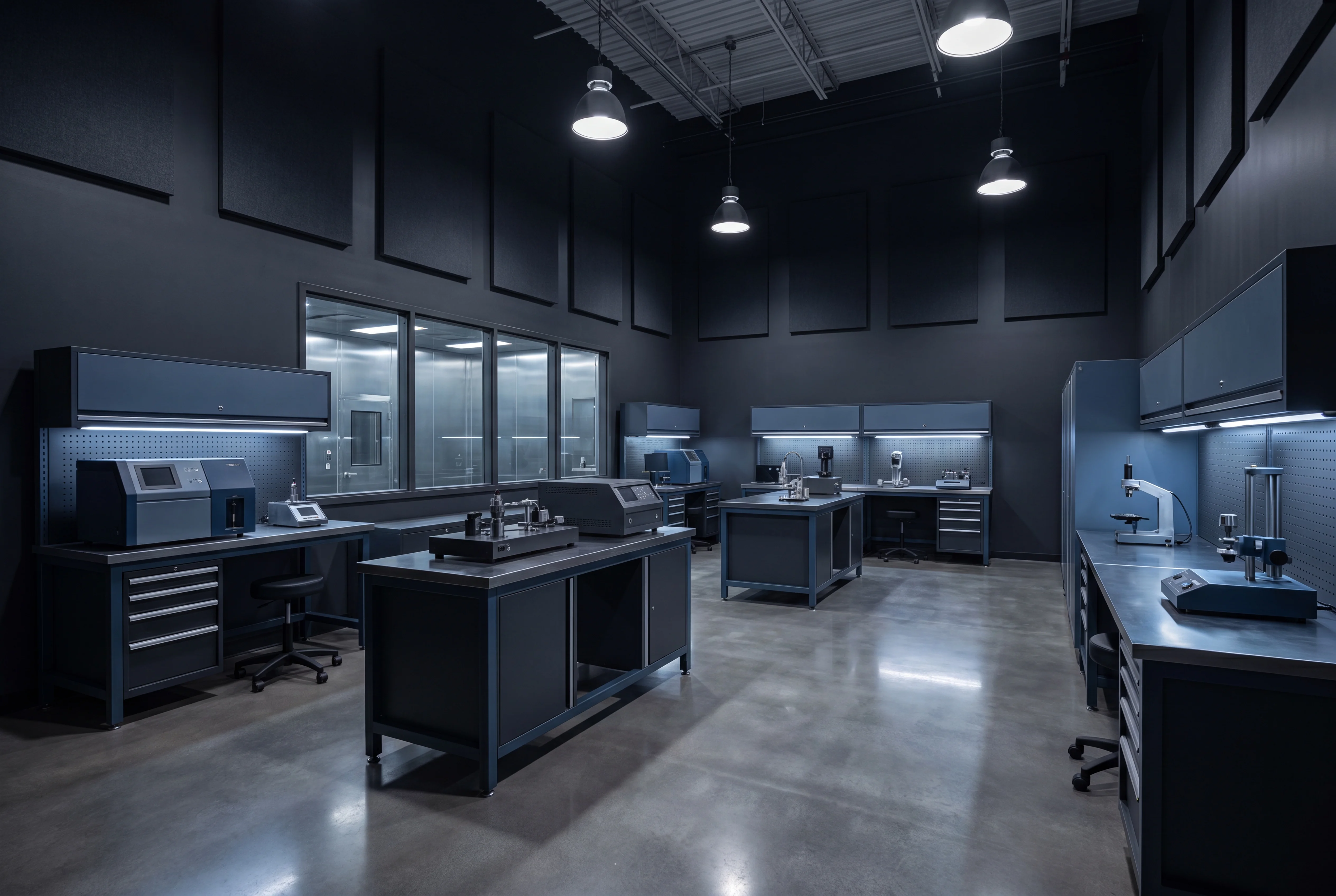
Pressure Decay Leak Tester
Calibration of pressure decay leak testers requires precise verification of both the internal pressure sensing circuitry and the temporal measurement parameters. The primary function of these instruments relies on detecting minute pressure variations within a known test volume over a specified duration to calculate volumetric leak rates, typically expressed in standard cubic centimeters per minute (sccm) or equivalent metric units. To ensure measurement integrity, calibration is performed by applying known reference pressures across the instrument's operational range and comparing the indicated values against master standards maintaining documented NIST traceability.
Because pressure decay leak testing is critical for component integrity validation in automated manufacturing and quality control environments, the verification process must account for environmental variables such as temperature fluctuations and adiabatic effects that can skew decay profiles. Verification procedures are executed under strict laboratory controls in accordance with ISO/IEC 17025 accreditation requirements. The comprehensive calibration protocol evaluates several core functional elements to ensure reliable defect detection:
- Multipoint verification of the internal pressure transducer across its complete target span.
- Assessment of the instrument timing circuits governing the fill, stabilization, and test phases.
- Validation of the leak rate calculation algorithms using calibrated reference master leaks.
- Evaluation of zero-stability and measurement repeatability under simulated test volume conditions.
Vacuum Decay Leak Tester
Vacuum decay leak tester calibration is executed to verify the measurement accuracy of differential pressure transducers, vacuum sensors, and volumetric flow components under precise pressure-drop conditions. Calibration is performed under ISO/IEC 17025 accreditation to ensure the metrological traceability of pressure, time, and volume metrics to National Institute of Standards and Technology (NIST) standards. This process aligns with industry methodologies, including ASTM F2338, ensuring non-destructive test validity. During verification, master leak standards and calibrated reference volumes are introduced to simulate specific leak rates, typically quantified in standard cubic centimeters per second (sccs) or Pascals per second (Pa/s). This rigorous verification ensures that the decay curve analysis utilized by the instrument remains highly sensitive and repeatable, preventing false-pass results. Critical calibration parameters include:
- Transducer Linearity: Assessment of the internal pressure sensors across the full vacuum scale to ensure uniform measurement response.
- Decay Rate Accuracy: Verification of the timing circuits and algorithmic calculation of pressure drop per unit time.
- Chamber Volume Verification: Validation of the correlation between test chamber volume and pressure changes to maintain calibrated leak rate calculations.
- System Resolution and Repeatability: Confirmation that the instrument can distinguish minute pressure variations from baseline environmental noise.
Mass Flow Leak Tester
Mass flow leak testers are calibrated to verify both the pressure measurement circuitry and the mass flow sensor, ensuring precise quantification of leak rates in production or quality assurance environments. Calibration is performed by comparing the instrument's mass flow readings against high-accuracy reference flow meters and precision pressure calibrators. This procedure confirms that flow rates, typically measured in standard cubic centimeters per minute (sccm) or standard liters per minute (slpm), remain within OEM specification limits across the entire operating range.
Under ISO/IEC 17025 accreditation parameters, mass flow leak tester calibration requires strict environmental controls and documented metrological traceability to the National Institute of Standards and Technology (NIST). The multipoint calibration sequence evaluates linearity, repeatability, and hysteresis. Routine verification of these test systems mitigates the risk of false passes or false failures in critical component leak testing applications. Key parameters validated during the calibration cycle include:
- Flow sensor accuracy across defined measurement ranges
- Pressure transducer verification at the specified test pressure state
- Zero-flow offset and span calibration adjustments
- System leak integrity and differential pressure stability
- Temperature compensation circuitry functionality
Technical Detail
Helium Leak Detector Calibration
Helium leak detector calibration involves the precise verification of the internal mass spectrometer tube and vacuum pumping system against known standard leaks. Calibration is performed under ISO/IEC 17025 accreditation, ensuring that measured leak rates maintain unbroken traceability to the National Institute of Standards and Technology (NIST) or equivalent national metrology institutes. The evaluation covers both vacuum and sniffing operational modes across multiple decades of sensitivity, typically validating readings from gross leak ranges down to ultra-fine leak thresholds of 10^-12 atm-cc/sec. Strict adherence to established vacuum technology guidelines ensures that the internal reference leak and the detector analytical components function within specified tolerances.
Critical parameters evaluated during the certification of mass spectrometer helium leak detectors include:
- Standard leak comparison: Direct signal validation using reference temperature-compensated capillary or permeation helium standard leaks.
- Zero-point stability: Assessment of the baseline signal and noise floor under high vacuum to determine the true minimum detectable leak rate.
- Response and clean-up time: Measurement of the detector signal rise time upon helium exposure and the subsequent pumping clearance speed.
- Ion source performance: Verification of filament emission current and spectrometer tuning for optimal helium peak resolution.
- Crossover pressure points: Testing of the transition valves between roughing, foreline, and high-vacuum turbo molecular stages to prevent spectrometer contamination.
Leak Tester Calibration in Fort Wayne
The concentration of advanced manufacturing in Allen County and the broader Northeast Indiana region creates a continuous requirements environment for precise pressure-decay, mass-flow, and vacuum-decay leak testing. Facilities operating along the Interstate 69 industrial corridor, including heavy automotive assembly, aerospace electronics, and medical device manufacturing plants, rely on validated leak detection systems to ensure product safety and structural integrity. Key local installations such as the General Motors Fort Wayne Assembly plant and the Dana Corporation drivetrain facility require calibrated leak testers to verify the seal integrity of automotive transmissions, axles, and fluid-routing assemblies under harsh operating conditions. Similarly, advanced material manufacturers like Trelleborg AB, specializing in high-performance polymer seals and custom-engineered damping solutions, utilize leak detection instrumentation to guarantee the performance limits of critical sealing solutions distributed across global automotive and aerospace supply chains.
More on leak tester calibration in Fort Wayne
Aerospace and medical device manufacturing in the Fort Wayne metropolitan area add highly sensitive requirements to this regional calibration profile. Facilities like BAE Systems and specialized medical suppliers such as Fort Wayne Metals require leak testers calibrated to extremely narrow tolerances to verify the hermetic seals of defense avionics, military propulsion systems, and implantable medical materials. Pressure and vacuum integrity in these fields is critical to preventing the ingress of environmental contaminants or the egress of internal gases and fluids in extreme environments. Consequently, regional industrial parks, manufacturing corridors, and production centers near the Fort Wayne International Airport generate a steady volume of pressure metrology work designed to prevent catastrophic failure points in critical defense systems and sterile clinical packaging.
Technical Standards and Calibration Compliance Frameworks
Regulatory oversight and quality systems dictate the rigorous calibration schedules for leak testers operated within Northeast Indiana industrial plants. For automotive suppliers, adherence to the IATF 16949 quality standard mandates that all testing and inspection equipment undergo routine, documented calibration traceable to national or international standards. In the medical device and pharmaceutical sectors, compliance with FDA 21 CFR Part 211 and ISO 13485 requires validated non-destructive package integrity testing to protect patient health. Standard test methods, such as ASTM F2095 for pressure decay leak testing of flexible packages and ASTM F2338 for non-destructive vacuum decay testing of sterile barrier packaging, specify that the pressure and flow transducers within leak testing systems must be verified using NIST-traceable calibration standards to ensure repeatable, objective measurement criteria during production line challenges.
Accurate calibration of leak testing systems involves comparing instrument performance against certified reference standards under highly controlled environmental conditions. System components, including differential pressure sensors, mass flow controllers, and calibrated master leak orifices, are evaluated to verify that system uncertainty falls within strict tolerance limits, typically +/- 1.5% of the stated flow rate or 0.1 standard cubic centimeters per second (sccm). ISO/IEC 17025 accredited calibration procedures govern the verification of these instruments, ensuring that test measurements are directly traceable to national benchmarks and that calibration certificates provide the documented measurement uncertainty required for regulatory audits. Regular calibration intervals of six to twelve months are standard to counteract sensor drift and pneumatic valve wear, guaranteeing the continued efficacy of leak testing systems in high-throughput manufacturing lines.
The calibration protocol also extends to the verification of master leak standards, which are calibrated micro-orifices utilized to challenge and verify leak test cycles in production environments. These orifices simulate exact reject thresholds, enabling automated leak test programs to distinguish between compliant assemblies and defective units. Because temperature changes and atmospheric pressure fluctuations in Fort Wayne facilities can affect volumetric flow rates, calibration must account for local environmental factors to prevent false passes or false failures. Maintaining accredited calibration records for these master leaks ensures that the quantitative baseline measurements established during validation remain stable over prolonged operational lifecycles.
Related Services
Pressure Gauge Calibration
View in Fort Wayne ↗ RelatedDigital Pressure Gauge Calibration
View in Fort Wayne ↗ RelatedManometer Calibration
View in Fort Wayne ↗ RelatedPressure Transmitter, Transducer & Sensor Calibration
View in Fort Wayne ↗ RelatedPressure Switch & Relief Valve Calibration
View in Fort Wayne ↗ RelatedPiston Gauge Calibration
View in Fort Wayne ↗Request leak tester calibration in Fort Wayne.
Submit instrument details to receive an itemized quote within one business day. NIST-traceable results, documented for audit and compliance.