Accredited Industrial Leak Tester Calibration in Mankato, MN
Leak Tester Calibration in Mankato, MN is performed by ISO/IEC 17025-accredited laboratories to recognized acceptance criteria, with documented uncertainty and NIST-traceable results.
Quote Leak Tester Calibration — Mankato
Response within one business day
Service Overview
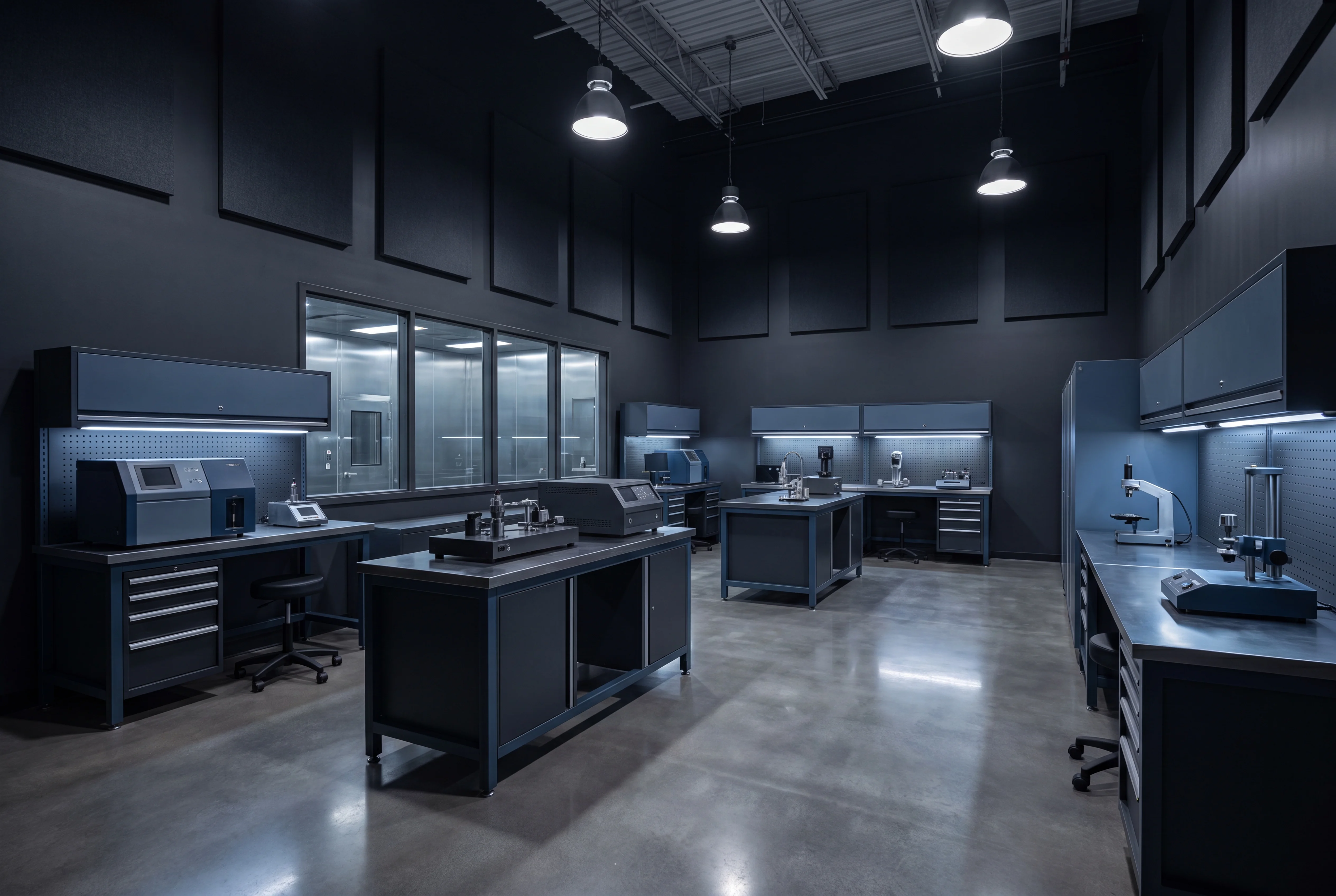
Pressure Decay Leak Tester
Calibration of pressure decay leak testers requires precise verification of both the internal pressure sensing circuitry and the temporal measurement parameters. The primary function of these instruments relies on detecting minute pressure variations within a known test volume over a specified duration to calculate volumetric leak rates, typically expressed in standard cubic centimeters per minute (sccm) or equivalent metric units. To ensure measurement integrity, calibration is performed by applying known reference pressures across the instrument's operational range and comparing the indicated values against master standards maintaining documented NIST traceability.
Because pressure decay leak testing is critical for component integrity validation in automated manufacturing and quality control environments, the verification process must account for environmental variables such as temperature fluctuations and adiabatic effects that can skew decay profiles. Verification procedures are executed under strict laboratory controls in accordance with ISO/IEC 17025 accreditation requirements. The comprehensive calibration protocol evaluates several core functional elements to ensure reliable defect detection:
- Multipoint verification of the internal pressure transducer across its complete target span.
- Assessment of the instrument timing circuits governing the fill, stabilization, and test phases.
- Validation of the leak rate calculation algorithms using calibrated reference master leaks.
- Evaluation of zero-stability and measurement repeatability under simulated test volume conditions.
Vacuum Decay Leak Tester
Vacuum decay leak tester calibration is executed to verify the measurement accuracy of differential pressure transducers, vacuum sensors, and volumetric flow components under precise pressure-drop conditions. Calibration is performed under ISO/IEC 17025 accreditation to ensure the metrological traceability of pressure, time, and volume metrics to National Institute of Standards and Technology (NIST) standards. This process aligns with industry methodologies, including ASTM F2338, ensuring non-destructive test validity. During verification, master leak standards and calibrated reference volumes are introduced to simulate specific leak rates, typically quantified in standard cubic centimeters per second (sccs) or Pascals per second (Pa/s). This rigorous verification ensures that the decay curve analysis utilized by the instrument remains highly sensitive and repeatable, preventing false-pass results. Critical calibration parameters include:
- Transducer Linearity: Assessment of the internal pressure sensors across the full vacuum scale to ensure uniform measurement response.
- Decay Rate Accuracy: Verification of the timing circuits and algorithmic calculation of pressure drop per unit time.
- Chamber Volume Verification: Validation of the correlation between test chamber volume and pressure changes to maintain calibrated leak rate calculations.
- System Resolution and Repeatability: Confirmation that the instrument can distinguish minute pressure variations from baseline environmental noise.
Mass Flow Leak Tester
Mass flow leak testers are calibrated to verify both the pressure measurement circuitry and the mass flow sensor, ensuring precise quantification of leak rates in production or quality assurance environments. Calibration is performed by comparing the instrument's mass flow readings against high-accuracy reference flow meters and precision pressure calibrators. This procedure confirms that flow rates, typically measured in standard cubic centimeters per minute (sccm) or standard liters per minute (slpm), remain within OEM specification limits across the entire operating range.
Under ISO/IEC 17025 accreditation parameters, mass flow leak tester calibration requires strict environmental controls and documented metrological traceability to the National Institute of Standards and Technology (NIST). The multipoint calibration sequence evaluates linearity, repeatability, and hysteresis. Routine verification of these test systems mitigates the risk of false passes or false failures in critical component leak testing applications. Key parameters validated during the calibration cycle include:
- Flow sensor accuracy across defined measurement ranges
- Pressure transducer verification at the specified test pressure state
- Zero-flow offset and span calibration adjustments
- System leak integrity and differential pressure stability
- Temperature compensation circuitry functionality
Technical Detail
Helium Leak Detector Calibration
Helium leak detector calibration involves the precise verification of the internal mass spectrometer tube and vacuum pumping system against known standard leaks. Calibration is performed under ISO/IEC 17025 accreditation, ensuring that measured leak rates maintain unbroken traceability to the National Institute of Standards and Technology (NIST) or equivalent national metrology institutes. The evaluation covers both vacuum and sniffing operational modes across multiple decades of sensitivity, typically validating readings from gross leak ranges down to ultra-fine leak thresholds of 10^-12 atm-cc/sec. Strict adherence to established vacuum technology guidelines ensures that the internal reference leak and the detector analytical components function within specified tolerances.
Critical parameters evaluated during the certification of mass spectrometer helium leak detectors include:
- Standard leak comparison: Direct signal validation using reference temperature-compensated capillary or permeation helium standard leaks.
- Zero-point stability: Assessment of the baseline signal and noise floor under high vacuum to determine the true minimum detectable leak rate.
- Response and clean-up time: Measurement of the detector signal rise time upon helium exposure and the subsequent pumping clearance speed.
- Ion source performance: Verification of filament emission current and spectrometer tuning for optimal helium peak resolution.
- Crossover pressure points: Testing of the transition valves between roughing, foreline, and high-vacuum turbo molecular stages to prevent spectrometer contamination.
Leak Tester Calibration in Mankato
Mankato's industrial sector, anchored by heavy manufacturing and specialized component production along the US Highway 14 corridor, drives a consistent requirement for automated leak testing verification. Facilities operating throughout Blue Earth and Nicollet counties produce complex electrical generation equipment, agricultural machinery components, and advanced commercial packaging systems. Within these automated manufacturing environments, leak testers are integrated directly into assembly lines to verify the structural integrity and hermetic sealing of cast metal enclosures, fluid reservoirs, and pneumatic control valves. The production of massive, heavy-duty alternators and power generation units requires strict ingress protection validation to ensure sensitive internal electrical windings are completely isolated from environmental contaminants such as dust, moisture, and industrial fluids. Additionally, the region's strong presence in commercial printing and packaging equipment manufacturing relies heavily on complex pneumatic systems and sealed fluid lines that must be routinely tested for microscopic pressure drops. This regional concentration of precision metalworking, plastics forming, and electromechanical assembly necessitates rigorous maintenance of the pressure decay, vacuum decay, and mass flow leak testing instruments utilized to qualify these physical products before they are released into broader North American supply chains.
More on leak tester calibration in Mankato
The operational environment in southern Minnesota's industrial parks, including the Eastwood Industrial Centre, demands high production and testing throughput without compromising strict quality assurance protocols. Manufacturers rely extensively on automated leak detection measurement systems to identify micro-porosity in aluminum castings, compromised elastomeric O-ring seals, and defective weld seams in the hydraulic cylinders utilized throughout heavy agricultural implements. When the instrumentation within these automated test stations drifts out of allowable analytical tolerances, the statistical risk of false passes or false failures increases exponentially. False passes allow defective, leaking components to reach end-users, potentially causing catastrophic fluid loss or mechanical failures in the field, while false failures disrupt local production quotas and force costly, unnecessary rework on perfectly sound parts. Consequently, engineering and quality control departments at these facilities mandate routine, highly accurate calibration of all production-line leak testers. The necessity for reliable metrology in the Minnesota River valley emphasizes the critical nature of maintaining localized, highly accurate reference standards to ensure the continuous operational readiness of these essential quality control stations.
Technical and Compliance Context for Leak Tester Calibration
The calibration of industrial leak testing instrumentation requires precise quantification of both differential pressure and time, physical parameters governed closely by the Ideal Gas Law (PV=nRT), where environmental temperature stability remains absolutely paramount. Calibration procedures for industrial pressure decay, vacuum decay, and mass continuous flow instruments are executed under the strict framework of ISO/IEC 17025, ensuring that all measurement reference standards are directly traceable to the National Institute of Standards and Technology (NIST). During a comprehensive calibration event, the internal absolute pressure transducers and differential sensors of the leak tester are subjected to rigorous verification against highly accurate digital pressure calibrators across the instrument's entire engineered operational range. Furthermore, certified reference leaks - specialized precision devices engineered with microscopic capillary tubes or permeation membranes to simulate a specific, controlled leak rate measured in standard cubic centimeters per minute (sccm) - are utilized to master the automated test instrument. These reference leaks themselves undergo separate, rigorous volumetric or gravimetric calibration protocols to certify their specific flow characteristics at explicitly defined test pressures.
Compliance with stringent quality management frameworks dictates the acceptable tolerance grades and mandatory calibration intervals for industrial leak testing stations. Facilities operating in the Mankato region must maintain comprehensive, auditor-ready documentation demonstrating that the calculated measurement uncertainty of the calibration process is mathematically appropriate for the specified acceptance criteria of the tested assemblies. For instance, testing a hydraulic directional valve body may require the instrumentation to accurately detect a pressure drop of just a few pascals over a complex, multi-second automated test cycle. This precise analytical requirement necessitates that the leak tester's analog-to-digital converters, internal chronometers, and differential pressure sensors function flawlessly within tight original equipment manufacturer specifications. Relevant testing methodologies often align with standards such as ASTM F2095 for pressure decay testing, establishing standardized approaches for verifying baseline seal integrity. Technical calibration routines also strictly evaluate the instrument's temperature compensation algorithms; because adiabatic heating naturally occurs during the rapid pressurized fill stage of a leak test cycle, accurate internal thermometry is critical. Ambient temperature fluctuations on a busy Mankato manufacturing floor can significantly skew pressure decay readings, potentially masking true volumetric leak rates and entirely invalidating the facility's localized quality control process.
Related Services
Pressure Gauge Calibration
View in Mankato ↗ RelatedDigital Pressure Gauge Calibration
View in Mankato ↗ RelatedManometer Calibration
View in Mankato ↗ RelatedPressure Transmitter, Transducer & Sensor Calibration
View in Mankato ↗ RelatedPressure Switch & Relief Valve Calibration
View in Mankato ↗ RelatedPiston Gauge Calibration
View in Mankato ↗Request leak tester calibration in Mankato.
Submit instrument details to receive an itemized quote within one business day. NIST-traceable results, documented for audit and compliance.