Accredited Industrial Piston Gauge Calibration in Hammond, IN
Piston Gauge Calibration in Hammond, IN is performed by ISO/IEC 17025-accredited laboratories to recognized acceptance criteria, with documented uncertainty and NIST-traceable results.
Quote Piston Gauge Calibration — Hammond
Response within one business day
Service Overview
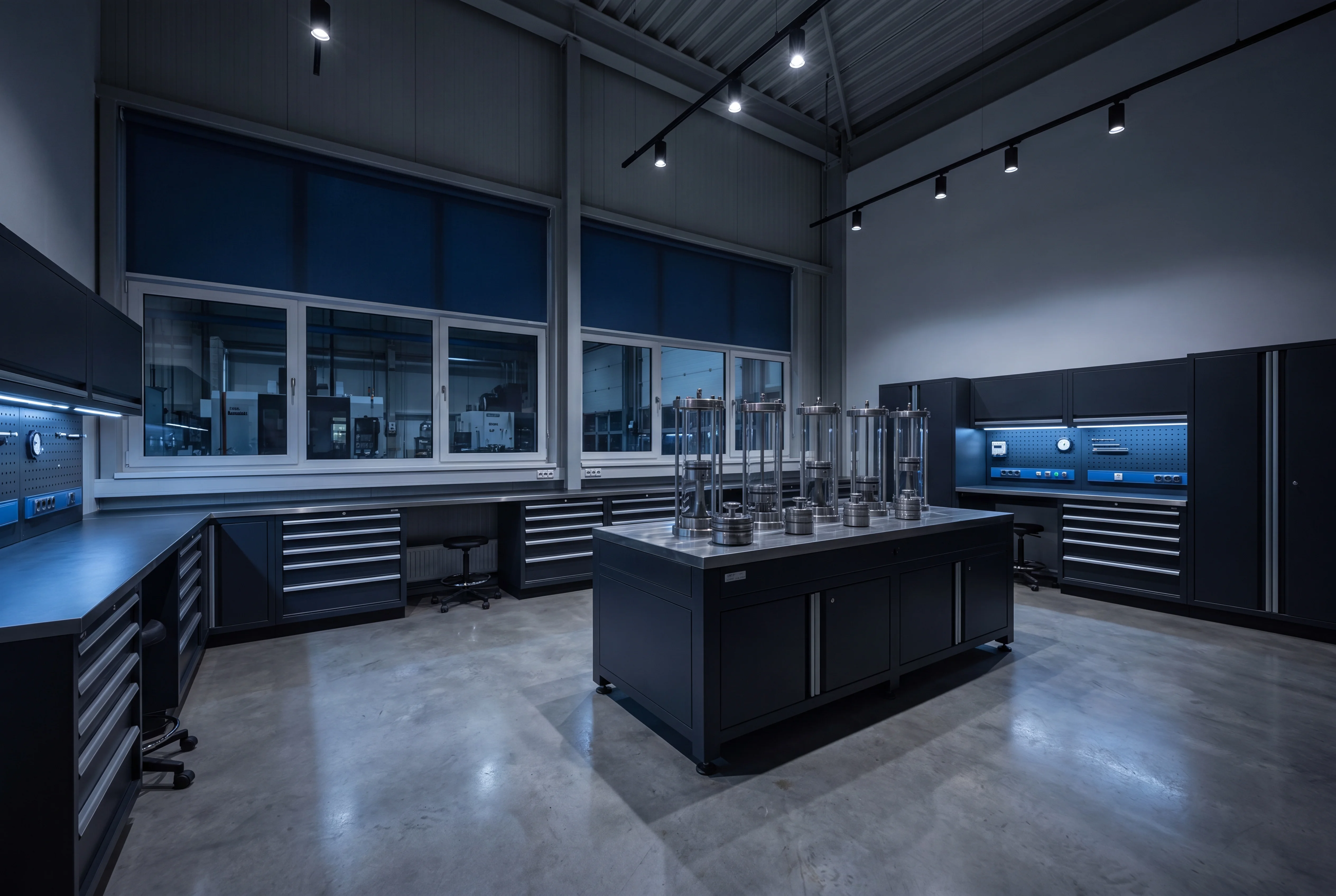
Piston Gauge Calibration Tolerance Acceptance Criteria
Tolerance acceptance criteria for piston gauge calibration are governed by strict metrological limits to establish the necessary measurement traceability and reduce uncertainty. Evaluation of deadweight tester and piston-cylinder assembly performance is typically conducted in compliance with international standards such as Euramet cg-3 or BS 9112. The primary criteria revolve around the determination of the effective area (A0) and its associated temperature coefficient (λ), ensuring that the cumulative system uncertainty remains within the specified tolerance band, often ranging from +/-0.005% to +/-0.02% of the reading.
- Effective Area Determination: Calculations of the piston-cylinder effective area must align with historical manufacturer data or nominal specifications, with deviations evaluated against defined maximum permissible errors.
- Pressure-Dependent Distortion: The distortion coefficient (b) must be quantified and verified to ensure the elastic deformation of the cylinder under high pressure does not exceed allowable limits.
- Fall Rate Verification: Piston fall rates are measured at maximum operating pressure to verify that clearance tolerances between the piston and cylinder restrict gas or oil bypass to acceptable rates.
- Mass Calibration Traceability: Individual mass pieces must be calibrated against standards traceable to NIST or other national metrology institutes, matching the requirements of OIML R111 Class F1 or F2 tolerances.
- Residual Magnetic Field: Piston and cylinder components are assessed to ensure magnetic permeability and residual magnetism do not introduce unwanted forces during rotation.
NIST Traceable Reference Standards for Deadweight Testers
Metrological traceability to the National Institute of Standards and Technology (NIST) is maintained through a rigorous chain of comparisons for all primary pressure standards. For deadweight testers and piston gauges, calibration is performed under ISO/IEC 17025 accreditation, ensuring that reference masses and piston-cylinder assemblies are directly traceable to national standards. Precision mass calibration is executed using substitution weighing designs against NIST-traceable mass standards, accounting for local gravity, air buoyancy, and material density to minimize systematic uncertainty.
The determination of the effective area (A0) and the thermal expansion coefficient is critical for deadweight tester performance. Measurements are conducted in temperature-controlled environments to quantify structural and dimensional changes under pressure. Key technical parameters evaluated during this process include:
- Effective Area (A0): Quantified across the pressure range to define the fundamental force-to-area ratio.
- Piston and Cylinder Thermal Expansion: Calculated using material coefficients to correct for temperature-induced dimensional changes.
- Mass Value Adjustments: Corrected for local gravity and air buoyancy to ensure precise force application.
- System Integrity and Spin Time: Evaluated to ensure minimal friction and optimal sensitivity during pressure generation.
Piston Gauge Calibration Measurement Uncertainty Calculations
Measurement uncertainty calculations for piston gauge calibration are conducted in strict accordance with the Guide to the Expression of Uncertainty in Measurement (GUM) and compliant with ISO/IEC 17025 accreditation requirements. The uncertainty budget must account for complex interrelated physical parameters that affect the primary pressure equation. Baseline calculations require the precise determination of the mass of the weights, local acceleration of gravity, and the zero-pressure effective area of the piston-cylinder assembly. Furthermore, environmental and mechanical corrections are evaluated as significant contributors to the expanded uncertainty.
Comprehensive uncertainty models for deadweight tester calibration include the systematic evaluation of several critical influence quantities:
- Air Buoyancy: Variations in ambient air density compared to the material density of the mass set.
- Thermal Expansion: Dimensional changes to the effective area driven by the linear thermal expansion coefficients of the piston and cylinder materials.
- Elastic Distortion: Pressure-dependent deformation of the piston-cylinder assembly, quantified by the distortion coefficient.
- Fluid Head Corrections: Hydrostatic pressure differences resulting from elevation variances between the reference plane and the instrument under test.
- Surface Tension: Forces acting on the piston in liquid-lubricated systems, particularly at low gauge pressures.
All uncertainty components are combined using the root-sum-square method, and an expansion factor (typically k=2) is applied to establish a 95 percent level of confidence, ensuring continuous metrological traceability to the International System of Units (SI).
Technical Detail
Effective Area Determination in Piston Gauge Calibration
The determination of the effective area of a piston-cylinder assembly is fundamental for establishing the metrological traceability of precision pressure generation. In primary standard applications, this baseline effective area is derived from high-precision dimensional metrology of the piston diameter and cylinder bore. For secondary and working standards, the effective area is typically established through a rigorous cross-floating procedure against a higher-order reference pressure balance. This comparison methodology measures the fluid equilibrium state between the unit under test and the reference standard across a defined pressure spectrum.
During this calibration process, multiple influencing variables are systematically quantified and corrected to maintain strict compliance with documented procedures and ISO/IEC 17025 accreditation requirements. Critical technical parameters evaluated during effective area determination include:
- The pressure distortion coefficient of the assembly materials under applied loads.
- Thermal expansion coefficients of the specific piston and cylinder components.
- Fluid head corrections accounting for differences in reference levels.
- Air buoyancy corrections applied to the mass load, utilizing continuous monitoring of ambient temperature, barometric pressure, and relative humidity.
The resulting effective area at zero pressure, alongside its associated pressure distortion coefficient, is documented to ensure an unbroken chain of measurement traceability to the International System of Units (SI) through recognized national metrology institutes such as NIST.
Piston Gauge Calibration Process Steps and Safety Precautions
Piston gauge calibration is executed through a meticulous cross-float method, establishing direct pressure traceability to the SI through NIST or equivalent national metrology institutes. Because piston-cylinder assemblies determine pressure via the fundamental equation of force over area, accurate calibration requires strict control over environmental and procedural variables. Calibration is performed under ISO/IEC 17025 accredited procedures, beginning with extensive thermal stabilization to account for the thermal expansion coefficients of the specific piston and cylinder materials.
Strict safety protocols are mandated throughout the pressure generation cycle. High-pressure pneumatic and hydraulic systems present significant kinetic energy hazards; therefore, system integrity is systematically verified prior to pressurization, and overpressure protection mechanisms are actively monitored to prevent catastrophic failure or explosive decompression. The standard procedural workflow incorporates several critical phases:
- Preparation and Inspection: The pressure medium is verified for compatibility, and the assembly is meticulously cleaned to prevent scoring and ensure optimal spin times.
- Thermal Equilibrium: The unit under test is stabilized to ambient laboratory temperature to minimize dimensional uncertainties prior to mass application.
- Cross-Floating: Pressure is generated and balanced between the primary reference standard and the unit under test, ensuring both pistons are floating and rotating freely within their operational stroke.
- Data Acquisition: Fall rates and spin durations are evaluated while environmental parameters are captured for accurate mass air buoyancy corrections.
- Mathematical Correction: Final effective area and mass values are derived by applying strict corrections for local gravity, fluid head variations, and thermal expansion.
Environmental Corrections for Precision Piston Gauge Calibration
Precision piston gauge calibration, often executed to support ISO/IEC 17025 accredited laboratory operations, requires meticulous environmental corrections to minimize measurement uncertainty. Because primary pressure calculations depend directly on the effective area of the piston-cylinder assembly and the local gravitational force, several physical variables must be systematically monitored and corrected. These mathematical corrections transform nominal pressure values into highly accurate, NIST-traceable reference measurements.
To achieve optimal accuracy, the following critical environmental parameters must be accounted for during the calibration process:
- Thermal Expansion: Correction is applied to the piston and cylinder effective area based on the thermal expansion coefficients of the materials and the measured operating temperature.
- Local Gravity: The acceleration due to gravity varies by location and must be determined via localized gravity surveys to convert mass values to force.
- Air Buoyancy: Adjustments must be made for the density of the ambient air displacing the calibrated masses, calculated using local barometric pressure, temperature, and relative humidity.
- Elastic Deformation: At elevated pressures, the physical distortion of the piston-cylinder under stress is corrected using pressure coefficient calculations.
Mass Set Calibration and Gravity Correction Factors
Piston gauge accuracy depends fundamentally on the precise determination of the downward force exerted by the associated mass set. During calibration, individual mass pieces are evaluated to determine their true mass and conventional mass values with strict traceability to the International System of Units (SI). Because the actual pressure generated by a deadweight tester is a direct function of local gravitational acceleration, reliance on standard gravity values is insufficient for high-accuracy industrial and laboratory applications. Calibration data is provided so that the exact geographic coordinates of the deployment site can be used to calculate local gravity correction factors, ensuring the applied force is known with absolute precision.
To achieve the lowest possible measurement uncertainty under ISO/IEC 17025 accredited procedures, multiple physical and environmental variables must be factored into the applied pressure equation. The following critical parameters are evaluated and documented during the mass set calibration process:
- Local gravity acceleration: Adjustments required to compensate for the exact gravitational pull at the specific latitude and elevation of the instrument's final operating environment.
- Air buoyancy factors: Compensation for the upward buoyant force exerted by ambient air on the mass set, calculated using local air density and the material density of the weights.
- Surface tension and fluid head: Corrections for fluid column height differences between the reference standard and the device under test, primarily relevant in hydraulic pressure systems.
- Thermal expansion coefficients: Data required to correct the effective area of the piston-cylinder assembly when operating at temperatures deviating from the standard reference temperature of 20 degrees Celsius.
Piston Gauge Calibration in Hammond
Hammond, Indiana, situated within the highly industrialized Calumet region of Lake County, represents a concentrated hub for heavy manufacturing, metallurgical processing, and petrochemical refining. The proximity to massive processing infrastructures, such as the refining operations in adjacent Whiting and the expansive steel mills along the Lake Michigan shoreline, creates a critical dependency on highly accurate metrological standards. Within this environment, piston gauges function as the primary pressure references for entire facilities. Instrumentation laboratories located in the industrial parks near the Indiana Toll Road and along the corridors of the Indiana Harbor Belt Railroad utilize these deadweight testers to calibrate a vast array of secondary field instruments, including smart pressure transmitters, differential pressure sensors, and precision dial gauges. The regional supply chain, which includes specialized metal fabricators and chemical processors, demands rigorous process control to maintain product consistency and meet strict contractual specifications. Consequently, the calibration of the piston gauges themselves is foundational to the operational integrity of Northwest Indiana's heavy industrial sector.
More on piston gauge calibration in Hammond
Operational and regulatory pressures further amplify the necessity for precise piston gauge calibration within Hammond's industrial facilities. In environments dealing with volatile petrochemicals or high-pressure steam systems inherent in steel manufacturing, measurement errors can lead to process inefficiencies, catastrophic equipment failures, or environmental containment breaches. Facilities operate under the watchful eye of environmental and occupational safety regulators, including the Indiana Department of Environmental Management (IDEM) and federal OSHA frameworks, which mandate rigorous mechanical integrity programs. The piston gauge sits at the top of the plant's internal traceability chain; if the effective area or mass set of this primary standard drifts from nominal values, that error propagates downward through hundreds or thousands of process control loops. To mitigate this risk, quality assurance managers and metrology engineers in Hammond require routine, highly documented calibration of their primary pressure standards to ensure continuous compliance with internal safety protocols and external regulatory audits.
Metrological Protocols and Traceability for Piston-Cylinder Assemblies
The calibration of a piston gauge is a complex metrological procedure that demands exact characterization of both the piston-cylinder effective area and the true mass of the associated weights. Standard practice in accredited laboratories follows stringent international guidelines, most notably EURAMET cg-03, which outlines the accepted methodology for cross-floating the instrument against a higher-order reference standard. This procedure involves balancing the pressures generated by the two systems, carefully observing the sink rates and rotational decay of the pistons to ensure fluid equilibrium. The calibration determines the effective area of the assembly at a reference temperature, typically 20 degrees Celsius, and calculates the pressure distortion coefficient, which accounts for the elastic deformation of the piston and cylinder under high pressure. All measurements must maintain unbroken traceability to the National Institute of Standards and Technology (NIST) or a recognized equivalent, satisfying the rigorous demands of the ISO/IEC 17025:2017 standard. For pressure metrology executed in Hammond, precisely defining the local acceleration of gravity is a mandatory technical requirement, as the downward force exerted by the mass set is directly proportional to local gravitational pull.
Compliance frameworks mandate extensive environmental monitoring and mathematical corrections during the calibration and subsequent use of piston gauges. Calculating the true pressure generated by the instrument requires dynamic air buoyancy corrections applied to the mass set. This necessitates the continuous measurement of ambient temperature, barometric pressure, and relative humidity within the calibration laboratory to determine local air density. Furthermore, the mass sets themselves must be calibrated in accordance with OIML R 111-1 or ASTM E617 specifications to guarantee that individual weight values and their associated uncertainties are tightly controlled. The thermal expansion coefficients of the specific materials used in the piston and cylinder construction - such as tungsten carbide, austenitic stainless steel, or specialized ceramics - are integrated into the final pressure equations to correct for temperature deviations in the field. The resulting calibration documentation provides Hammond industrial facilities with a comprehensive uncertainty budget, incorporating the effective area, mass values, local gravity, and environmental variables, thereby ensuring that strict tolerance grades are met and regulatory compliance is maintained throughout the measurement hierarchy.
Related Services
Pressure Gauge Calibration
View in Hammond ↗ RelatedDigital Pressure Gauge Calibration
View in Hammond ↗ RelatedManometer Calibration
View in Hammond ↗ RelatedPressure Transmitter, Transducer & Sensor Calibration
View in Hammond ↗ RelatedPressure Switch & Relief Valve Calibration
View in Hammond ↗ RelatedLeak Tester Calibration
View in Hammond ↗Request piston gauge calibration in Hammond.
Submit instrument details to receive an itemized quote within one business day. NIST-traceable results, documented for audit and compliance.