Accredited Industrial Vacuum Gauge Calibration in Ann Arbor, MI
Vacuum Gauge Calibration in Ann Arbor, MI is performed by ISO/IEC 17025-accredited laboratories to recognized acceptance criteria, with documented uncertainty and NIST-traceable results.
Quote Vacuum Gauge Calibration — Ann Arbor
Response within one business day
Service Overview
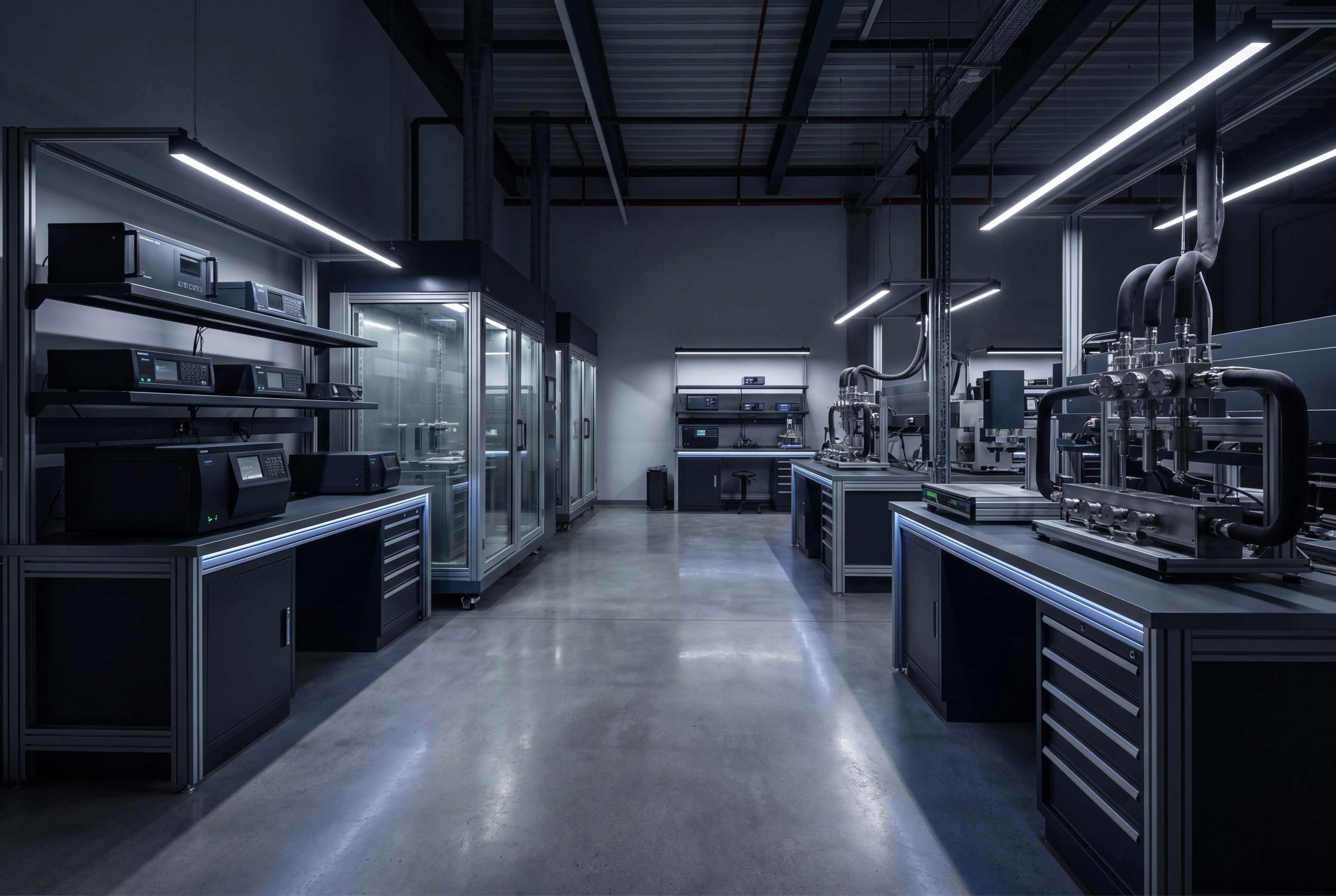
Pirani Gauge Calibration
Pirani gauge calibration is performed using comparison methods against high-precision reference standards, such as capacitance diaphragm gauges or spinning rotor gauges, to ensure measurement accuracy across the typical thermal conductivity range of 10^-3 Torr to atmospheric pressure. Because these thermal conductivity sensors rely on the rate of heat loss from a heated filament to the surrounding gas, the measurement is highly dependent on gas species. Calibration is executed utilizing ultra-pure nitrogen, dry air, or application-specific gases to establish precise response curves. All reference standards maintain direct NIST traceability, and procedures are executed under ISO/IEC 17025 accredited quality management systems to minimize measurement uncertainty.
During the calibration process, several critical technical parameters are evaluated and documented:
- Zero-Point Calibration: Adjusting the gauge output at base vacuum levels, typically below 10^-4 Torr, to eliminate electronic drift and filament contamination offsets.
- Atmospheric Span Adjustment: Verifying sensor response at ambient pressure to ensure correct scaling across the full dynamic range.
- Gas Sensitivity Verification: Calibrating the sensor against specific gas types to validate correct thermal conductivity correction factors.
- Repeatability and Hysteresis: Assessing the stability of the sensor filament through multiple ascending and descending pressure cycles.
Ionization Vacuum Gauge Calibration
Ionization vacuum gauges, including both hot-cathode (such as Bayard-Alpert) and cold-cathode (Penning) configurations, require precise calibration to account for gas-dependent sensitivity and electrode degradation. Calibration of these high-vacuum and ultra-high vacuum (UHV) sensors is performed by comparison against primary standards or reference transfer standards, such as spinning rotor gauges, with direct traceability to the National Institute of Standards and Technology (NIST). This process is critical for establishing accurate correction factors across the designated measurement envelope, typically spanning from 10^-3 Torr down to 10^-10 Torr.
The technical evaluation and calibration protocols align with established industry standards and metrological practices:
- Standard Compliance: Calibration is executed in accordance with guidelines such as ISO/TS 3567 for vacuum gauges, ensuring rigorous methodology.
- Accreditation Framework: Metrological operations are conducted under an ISO/IEC 17025 accredited quality management system to ensure low measurement uncertainty.
- Gas-Species Correction: Correction factors are determined for specific process gases, including nitrogen, argon, and helium, to correct for ionization probability variations.
- Linearity Assessment: Multi-point calibration is utilized to map the non-linear response regions inherent to sensor controller electronics at extreme vacuum limits.
- Traceability Verification: Reference instruments maintain unbroken traceability chains to national metrology institutes for validated compliance.
Capacitance Diaphragm Vacuum Gauge Calibration
Capacitance diaphragm gauge (CDG) calibration is performed to ensure the precision of tensioned diaphragm sensors as they deflect under varying pressures. These instruments, critical for semiconductor processing and thin-film deposition, require precise verification across low-vacuum ranges from 10^-5 Torr up to atmospheric pressure. Calibration is conducted under ISO/IEC 17025 accredited quality systems, ensuring direct traceability to national standards such as the National Institute of Standards and Technology (NIST).
The calibration process utilizes high-accuracy reference standards, such as secondary standard CDGs or spinning rotor gauges, in a temperature-controlled environment to mitigate thermal drift. Key technical parameters evaluated during calibration include:
- Zero-Offset Adjustment: Alignment of the base capacitance reading under high vacuum conditions below the resolution limit of the gauge.
- Span and Linearity Verification: Measurement of the capacitance change across multiple decade steps to verify response linearity.
- Hysteresis Evaluation: Assessment of sensor repeatability during both ascending and descending pressure cycles.
- Thermal Stabilization: Monitoring of heated sensor models (typically operated at 45, 100, or 160 degrees Celsius) to ensure temperature-dependent drift is minimized.
Vacuum Gauge Calibration in Ann Arbor
The industrial and technological landscape of Ann Arbor, situated within Washtenaw County, creates a distinct demand for precision vacuum metrology. The region hosts a significant concentration of automotive research, biomedical development, and advanced manufacturing operations. Facilities such as the EPA National Vehicle and Fuel Emissions Laboratory rely on extensive environmental simulation chambers, where vacuum gauges monitor sub-atmospheric pressures to replicate various altitude and operating conditions. Furthermore, technology corridors including Avis Farms Research & Business Park and Ann Arbor Research Park are home to semiconductor development, optics manufacturing, and aerospace engineering firms. In these sectors, physical vapor deposition (PVD) and chemical vapor deposition (CVD) processes require strict adherence to specific vacuum regimes. The vacuum gauges governing these systems - ranging from roughing pump monitors to ultra-high vacuum ion gauges - are critical to maintaining process integrity and avoiding microscopic contamination.
More on vacuum gauge calibration in Ann Arbor
Beyond industrial manufacturing, the proximity to the University of Michigan North Campus Research Complex (NCRC) fosters a dense network of private life sciences and materials research laboratories. Mass spectrometry setups, electron microscopes, and lyophilization equipment within these facilities depend heavily on capacitance manometers, Pirani gauges, and cold cathode gauges. These sensitive instruments are frequently exposed to harsh operating environments, resulting in calibration drift caused by the accumulation of pump oils, outgassing of materials, and frequent thermal cycling. To correct these measurement deviations, routine vacuum gauge calibration is necessary.
Regional tier-one automotive suppliers also utilize vacuum systems for critical leak testing, vacuum forming of composite materials, and brake booster verification. The operational pressures within Ann Arbor's technology sectors dictate that even fractional deviations in pressure measurement can lead to compromised experimental data or substantial manufacturing yield losses, driving a continuous necessity for verifiable calibration procedures locally.
Regulatory Framework and Traceability for Low-Pressure Metrology
Calibration of vacuum instrumentation within the Ann Arbor corridor is governed by stringent international quality frameworks, primarily anchored by ISO/IEC 17025:2017 standards for testing and calibration laboratories. Metrological traceability to the National Institute of Standards and Technology (NIST) is maintained through unbroken, documented chains of comparison. The calibration of these instruments typically aligns with procedures outlined in ISO 3567, which specifies the continuous and static expansion methods for calibrating vacuum gauges by direct comparison with a reference standard. For operations functioning within the local automotive supply network, adherence to IATF 16949 is required. This standard mandates that all measurement equipment, including vacuum transducers and dial indicators utilized in quality control, must undergo systematic calibration to prevent the release of nonconforming components.
Similarly, life science and medical device companies operating in the Washtenaw County region must comply with FDA 21 CFR Part 820. This regulation requires documented calibration intervals and rigorous environmental controls for all process-critical instrumentation. The acceptance criteria and tolerance grades applied during vacuum gauge calibration vary significantly across the measurement spectrum. While rough vacuum sensors, such as thermocouple and convection gauges, may carry acceptable tolerances of +/- 10% to 20% of the indicated reading, high-precision capacitance manometers operating in the millitorr range often demand accuracies exceeding +/- 0.5% of reading.
The verification process involves isolating the device under test within a specialized, leak-tight calibration manifold. Depending on the target pressure regime, either static expansion or dynamic flow methods are employed, utilizing precision transfer standards such as:
- Spinning rotor gauges for accurate measurements within high vacuum regimes
- High-accuracy resonance silicon gauges utilized for medium vacuum ranges
- Primary standard deadweight testers specifically adapted for sub-atmospheric calibration reference points
By adhering to these standardized methodologies and maintaining strict uncertainty budgets, facility engineers guarantee that critical low-pressure measurements remain compliant with the regulatory oversight shaping Ann Arbor's advanced industrial base.
Related Services
Pressure Gauge Calibration
View in Ann Arbor ↗ RelatedDigital Pressure Gauge Calibration
View in Ann Arbor ↗ RelatedManometer Calibration
View in Ann Arbor ↗ RelatedPressure Transmitter, Transducer & Sensor Calibration
View in Ann Arbor ↗ RelatedPressure Switch & Relief Valve Calibration
View in Ann Arbor ↗ RelatedLeak Tester Calibration
View in Ann Arbor ↗Request vacuum gauge calibration in Ann Arbor.
Submit instrument details to receive an itemized quote within one business day. NIST-traceable results, documented for audit and compliance.